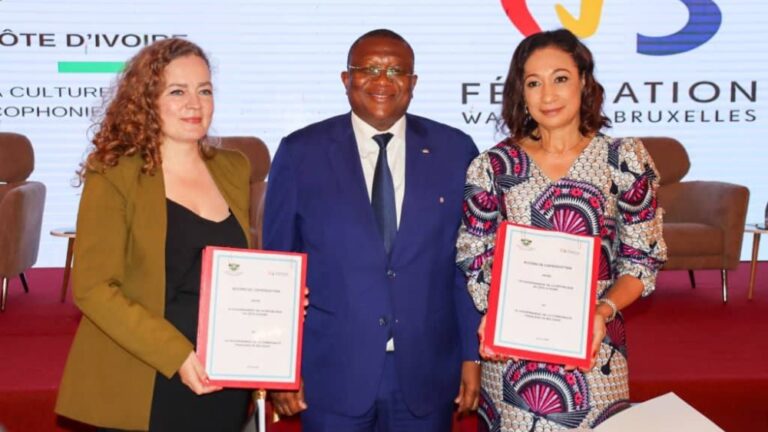
At the heart of Africa’s burgeoning film industry, the recent International Salon for Audiovisual Content (SICA) in Abidjan marked a pivotal moment. A new treaty between Ivory Coast and the French-speaking Walloon Region of Belgium has laid the groundwork for a transformative era in co-productions. This milestone event, featuring candid discussions and insightful panels, signifies a strengthening bond between African cinema and global markets, heralding Africa’s next move in the cultural landscape.
Building Bridges Through Co-Production
The Abidjan event escalated beyond a typical roundtable discussion when a landmark co-production treaty was signed, symbolizing more than a diplomatic agreement. Françoise Remarck, Ivory Coast’s Minister of Culture, emphasized its significance: “It’s a major step in structuring the Ivorian film industry and developing solid partnerships with the great cultural nations of the world.” This initiative, following its inception at the 2024 Cannes Film Festival, is a beacon for African cinema’s evolution.
Joining Morocco, Senegal, and France, Belgium emerges as a key ally, paving the way for fruitful co-productions. The treaty introduces Ivory Coast to Belgium’s tax shelter system and offers access to advanced audiovisual infrastructure, festivals, and training programs, fostering a collaborative environment.
Fostering Cultural Dynamism and Exchange
Céline Ganseman from the Belgian Embassy encapsulated the treaty’s spirit, stating, “Richness is born from exchange. To open up the Ivory Coast is to open up to its cultural dynamism and creative energy.” Engaging with Belgium’s expertise could lead to significant mutual enrichment, a vision shared by many stakeholders.
A pre-treaty panel titled “Inter-African and International Co-Productions and the Distribution of Works” set the stage, highlighting the importance of such agreements. Comedian and producer Mamane moderated discussions with industry leaders, unveiling the potential of African audiovisual production beyond the continent.
Insights from Industry Pioneers
The panel featured prominent figures like South African producer Dan Jawitz, Mauritanian director Abderrahmane Sissako, and others. Sissako emphasized the relational nature of cinema: “When you find the right person to connect with, everything becomes easier.” The conversation stressed the importance of vision, infrastructure, and strong partnerships in successful co-productions.
Dan Jawitz shared insights into South Africa’s success with co-production treaties and financial incentives, highlighting their economic impact: “They come because the financing works. And it stimulates the economy.” His remarks illustrated how strategic financial policies bolster international collaborations, drawing global interest.
French producer Axel Guyot urged African nations to implement competitive tax credit policies, providing producers with clear financial incentives. Meanwhile, Burkina Faso’s Dani Kouyaté stressed the necessity of training for sustainable growth in the industry, highlighting the importance of developing a skilled workforce.
From Talk to Tangible Action
The discussion transitioned seamlessly into action with the official signing of the Ivory Coast-Belgium co-production treaty. Mamane humorously noted that this deal serves as “proof that these kinds of conversations actually lead to something,” reinforcing the belief that dialogue can inspire real change.
This landmark event in Abidjan marks a significant step forward, positioning Africa for a new chapter in global cinema. As these partnerships flourish, Africa’s next move promises to reshape its future in the film industry, creating opportunities for dynamic cultural exchange and economic growth.