In the latter half of 1976, England and America witnessed two dramatically different live music scenes emerging simultaneously. While superstar acts like Peter Frampton, Fleetwood Mac, the Who, and the Rolling Stones were achieving astronomical ticket sales, necessitating massive venues such as football stadiums and outdoor fields, a wave of young, rebellious groups like the Ramones and the Clash began to form. These new musicians eschewed the excesses of progressive rock, seeking a back-to-basics minimalism that characterized the punk movement.
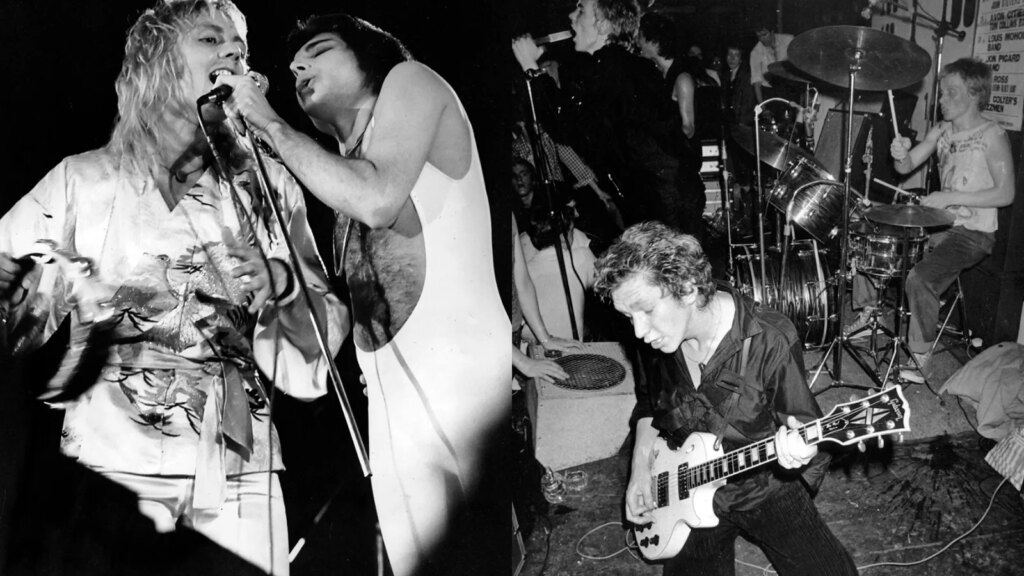
The stark contrast between these two musical worlds became most evident in September 1976, when Queen performed a free concert in London’s Hyde Park for an audience of approximately 150,000 fans, just two days prior to the 100 Club Punk Special, which saw 600 attendees packed into the intimate venue for electrifying performances by bands such as the Damned, the Buzzcocks, the Clash, the Sex Pistols, and a nascent group showcasing themselves as Siouxsie and the Banshees.
For the U.K. music press, both events signaled the arrival of a long-awaited new era in rock during a time when mainstream charts were dominated by less ambitious acts, epitomized by the Bay City Rollers’ hit “I Only Want to Be With You.” “At last, the Seventies have arrived,” enthused Melody Maker’s Harry Doherty, praising the reverberations from the Queen concert as setting a tone for the decade ahead. Similarly, Caroline Coon of Melody Maker acknowledged evidence of a revolutionary shift as she observed the crowd lining up for the Punk Rock Festival. “There’s been nothing for years. I just want to be involved,” expressed Gareth, an 18-year-old at the front of the queue, highlighting the desperate need for a cultural connection among youth.
Editor’s picks
Only five years earlier, Queen’s fanbase was much smaller, filling venues akin to the 100 Club. However, songs like “Seven Seas of Rhye,” “Killer Queen,” “Now I’m Here,” “You’re My Best Friend,” and the monumental “Bohemian Rhapsody” had propelled them to unprecedented heights, with their album A Night at the Opera achieving platinum status worldwide. As they prepared for the concert that would mark the biggest free show in Hyde Park since the Rolling Stones in 1969, Queen’s momentum was undeniable, even without a new album ready to back them up.
“I don’t think there’s ever been a show like we’re going to do in the park,” Brian May, Queen’s guitarist, told Melody Maker just days before the event. May assured fans they would hold nothing back, promising an entertaining and memorable experience. Yet organizing the show proved challenging; less than a week before, headlining acts were changed at promoter Richard Branson’s insistence, a move criticized for diluting the festival’s value.
Related Content
Despite missing a typical lineup with a full band including keyboardists, Queen utilized stunning theatrics, pyrotechnics, and the distinctive showmanship of Freddie Mercury to deliver an unforgettable performance. “The music veered from the wild excitement of ‘Ogre Battle’ and ‘Brighton Rock’ to soothing pieces in the mould of the moving ‘You Take My Breath Away’ without ever losing pace,” Doherty commented, acknowledging Queen’s capability to create an electric atmosphere in both open-air venues and smaller theaters.
While Queen concluded their set with “In the Lap of the Gods… Revisited” and planned an encore featuring classics like “Now I’m Here” and “Jailhouse Rock,” the authorities barred them from continuing due to safety concerns regarding the immense crowd. The media, however, painted a chaotic picture, with reports from The Sunday Mirror suggesting “several injuries” and “arrests” during the concert.
Simultaneously, at the 100 Club, a very different atmosphere prevailed. The energy was palpable as lesser-known punk acts took the stage, drawing a rowdy crowd and fostering a raw essence of rebellion. In attendance were the Sex Pistols, the Clash, the Damned, the Buzzcocks, and Siouxsie and the Banshees, each representing the defiance and energy of the burgeoning punk scene.
Coon noted the crowd’s fervor, highlighting the sheer unpredictability of a punk festival where novice musicians stood on stage. “Apart from Suzi, it wasn’t decided who would actually end up doing the festival until the day,” she recounted, showcasing the improvisational spirit that thrived within punk culture.
The atmosphere reached a peak with the Sex Pistols closing the night, delivering a set fueled by their aggressive sound. Among their performances were tracks like “Anarchy in the U.K.” and “Pretty Vacant.” Coon observed the tumultuous reception from the audience, noting that the rising success of the band brought mixed feelings among their original fans.
While the future held challenges for the Sex Pistols, including internal clashes and management issues, their impact during this formative period cannot be understated. They would go on to create influential works like Never Mind the Bollocks, Here’s the Sex Pistols, shaping the landscape of punk rock in the U.K. Their performance at the 100 Club Punk Special was a defining moment witnessed by key future talents in the scene.
On reflection, Doherty’s assertion that the Seventies began only in September 1976 might seem an oversimplification of a complex era. Rock had commenced with titans like Led Zeppelin, Black Sabbath, and David Bowie, but something undeniably transformative was unfolding in England’s music scene. While Queen represented a peak of monumental success, the punk acts at the 100 Club ignited a sense of possibility and raw energy that marked the true dawn of a new era.
Trending Stories
No doubt, Queen’s legacy as one of music’s titan forces looms vast, overshadowing many of the punk acts. Yet, the sense of empowerment that emerged from the 100 Club inspired a generation determined to take back the stage. After those nights, imaginations buzzed with possibilities, and the new wave of punk creativity truly began to flourish.