The Royal Family’s Dining Etiquette Explained
The Royal Family’s dining etiquette is a fascinating blend of history and refined protocol that sets them apart from ordinary households. Each meal comes with its own set of rules, ensuring that guests and royal members alike adhere to a specific standard of conduct. This article delves into the nuances of The Royal Family’s dining etiquette, highlighting everything from prohibited foods to formal dress codes and table manners.
The Royal Family’s Banned Foods & Dining Traditions
One of the most notable aspects of The Royal Family’s dining etiquette is the prohibition of certain foods. Shellfish, for example, is generally avoided due to the risk of shellfish poisoning, as noted by former royal butler Grant Harrold in an interview with the Daily Express. He explained, “When dining, the Royal Family has to be careful with shellfish due to shellfish poisoning, due to their work schedules. Therefore you will not normally find this on the royal menu.”
Garlic is another food that is off-limits, a tradition that began with Queen Elizabeth II, who had a personal aversion to the ingredient. Former royal chef Darren McGrady elaborated for RecipesPlus, stating, “We can never serve anything with garlic or too much onions.” Additionally, foie gras is banned due to its controversial production methods; this decision came from then-Prince Charles in 2008, reflecting a growing awareness of animal rights. The ban was applauded by organizations like Viva!, emphasizing the impact of royal choices on societal norms.
A curious custom linked to dining in the royal household is the Christmas weigh-in tradition. This practice dates back to King Edward VII, who had guests weighed before and after their Christmas dinner to ensure they indulged in the festive feast. Royal expert Ingrid Seward noted in a 2018 interview with Grazia that guests were typically expected to gain three to five pounds during the celebration.
Formal Dress, Table Manners & Teatime Rules
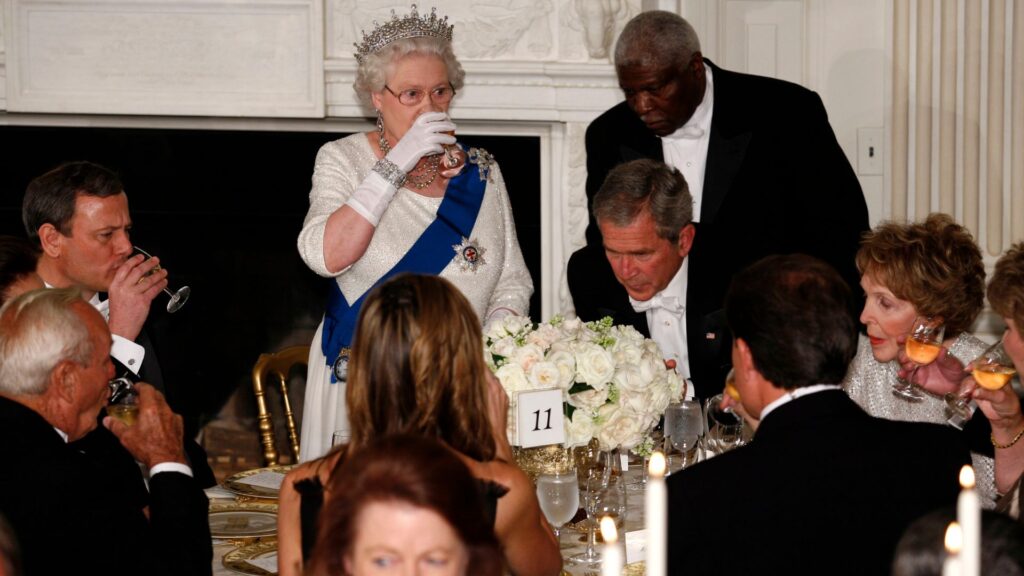
Dress code plays an essential role in The Royal Family’s dining etiquette. According to McGrady, the family often dresses in “ball gowns” for dinner, likening the ambiance to a luxurious “Downton Abbey” gathering. These formal dinners occasionally feature a bagpipe player circling the table, adding to the unique atmosphere.
In terms of table manners, etiquette expert William Hanson explained to Marie Claire that silence is golden. “In Western formal dining,” he said, “we don’t want any form of noise — whether that’s unpleasant sounds of mastication or the fork and knife scraping along a near-empty plate.” This focus on decorum allows meals to maintain their dignified tone.
Teatime boasts its own set of rules as well. According to Myka Meier, founder of Beaumont Etiquette, royals must hold their teacup using the thumb and index finger, with support from the middle finger. Former royal butler Harrold shared insights with Insider on stirring: “If the spoon touches the sides it makes a clinging sound and we don’t want that at the afternoon tea table.”
Importantly, dining etiquette also dictates that guests must follow the monarch’s lead at the table. Hanson elaborated for the Daily Express in 2022: “When dining with Her Majesty, no one should begin until she begins eating; similarly, when the Queen’s cutlery goes into the finished position, everyone else should follow suit — regardless of whether there is food left on their own plates.” While it remains to be seen whether King Charles has maintained this custom, it underscores the gravity of dining within the royal context.
The Royal Family’s dining etiquette not only serves to reinforce tradition but also reflects the deeper values of respect, formality, and history that characterize the monarchy. Each meal tells a story, fostering an environment where every detail matters, ensuring that royal dining remains an event of significance and sophistication.