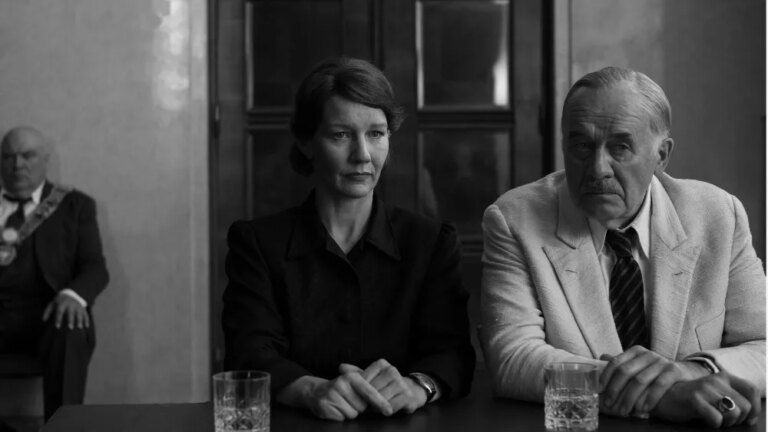
Netflix is keen to secure its place in the Oscar race with its latest film, “Ink,” directed by Danny Boyle. With its subject matter deeply intertwined with modern media origins, the film has already made waves at major film festivals, setting the stage for a compelling awards campaign.
Festival Triumphs and Theatrical Releases
Making its debut at the Venice Film Festival, “Ink” received a rapturous response, evidenced by a four-minute standing ovation on opening night. Following its premiere in Venice, the film moved on to the Telluride and Toronto Film Festivals, where it continued to generate buzz. Netflix plans to release it theatrically in December, followed by streaming in January, positioning it well for Oscar contention.
A Story of Power and Transformation
The film, adapted from James Graham’s acclaimed stage play, explores Rupert Murdoch’s controversial acquisition of The Sun in 1969 and the whirlwind change that ensued. Graham treats this significant moment as a heist, while Boyle infuses the narrative with his signature velocity. Central to the film is not merely the evolution of a tabloid but the inception of an attention economy that continues to influence our lives today.
Showcasing Compelling Performances
Guy Pearce leads the cast as a young Rupert Murdoch, embodying the driven outsider determined to shake up Fleet Street. Opposite him, Jack O’Connell portrays Larry Lamb, an editor navigating the turbulent waters of a transforming industry. Both performances present unique narratives for potential award nominations, although they compete in different categories. Pearce’s recent Oscar nomination for “The Brutalist” adds weight to his performance, especially given Murdoch’s contemporary relevance in shaping today’s fractured information landscape. O’Connell, meanwhile, capitalizes on recent visibility from projects like “Sinners” and the “28 Years Later” films, boosting his chances in a competitive best actor field.
A Strategic Awards Campaign
Having two strong performances in one film presents both opportunities and challenges for the awards campaign. Netflix must effectively communicate each actor’s significance while avoiding the perception of one overshadowing the other. The historical precedent for roles like Pearce’s suggests a clear path to nomination, recalling past real-life character portrayals that resonated with voters. Despite Pearce’s limited screen time, his performance leaves an indelible mark, while O’Connell carries a more dynamic narrative arc.
A Legacy of Adaptation
The screenplay for “Ink,” penned by Graham himself, aligns it with successful adaptations like “One Night in Miami,” which garnered an adapted screenplay nomination and an acting nod. This connection enhances the film’s accolades potential in that category.
Crafting a Competitive Edge
Beyond the leading performances, “Ink” is poised for recognition across various technical categories. With a production design that revives the essence of Fleet Street, skillful editing reminiscent of the styles seen in Adam McKay’s works, and a rich sound design from Oscar-winner Johnnie Burn, the film is equipped to claim numerous accolades. Daniel Pemberton’s original score delivers the momentum typical of Boyle’s films, further solidifying its competitive edge.
Navigating a Stacked Fall Slate
However, Netflix faces the challenge of presenting “Ink” effectively amidst a busy fall lineup that includes “La Bola Negra,” “The Adventures of Cliff Booth,” and more. All vying for attention, the film must capture voters’ focus against both external competitors and its own titles. The festival route has already laid a potent foundation for conversation, which is essential for maintaining momentum throughout the awards season.
The Cultural Context of ‘Ink’
Significantly, Boyle’s reputation as an Oscar-winning filmmaker enriches the film’s appeal. Coupled with Graham’s exploration of power dynamics in journalism, “Ink” resonates profoundly in today’s media landscape. The film argues that we are still shaped by the narratives put forth in the tabs they printed.
The rich tapestry of themes, performances, and technical prowess positions “Ink” as a potential heavyweight in the upcoming awards race, underscoring its relevance and the weight of its story in the current era.