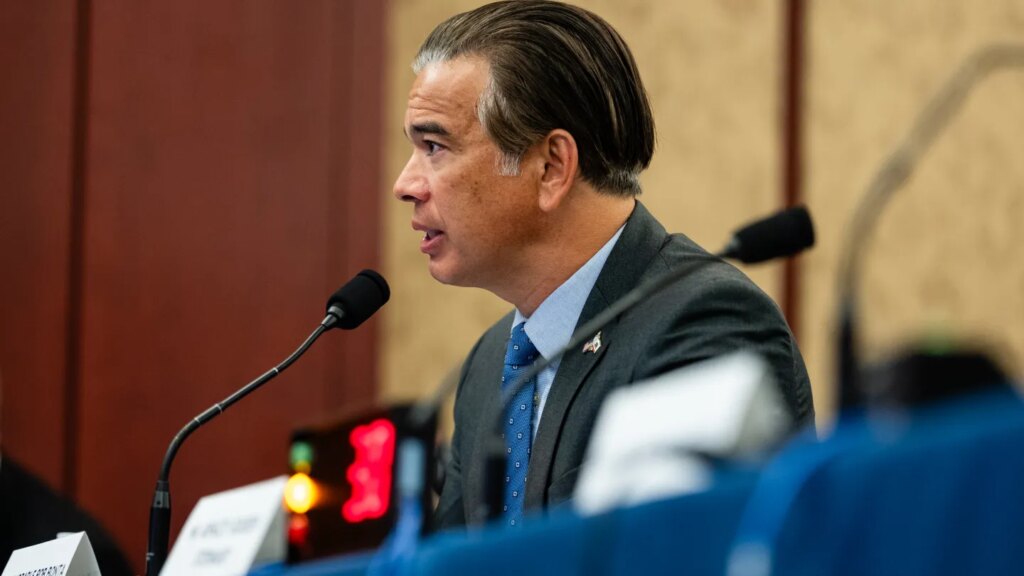
The path to a merger between Paramount and Warner Bros. Discovery has been fraught with challenges for David Ellison. Despite overcoming many obstacles, he faces a significant barrier: the antitrust lawsuit led by California Attorney General Rob Bonta. This lawsuit, filed last month, aims to block the merger and could lead to the divestiture of Warner Bros. assets, resulting in over a billion dollars in fees before a March trial. So far, the Northern California District Court judge has shown a favorable stance toward the states’ case, allowing it to progress with minimal interference.
Ellison’s Legal Maneuvers
In recent weeks, Ellison has attempted to counter Bonta’s legal efforts through various strategies, including media outreach, threats to relocate operations out of California, and a motion attempting to shift the financial burden of ticking-clock fees onto taxpayers. While Bonta has largely refrained from publicly discussing these strategies, he spoke with The Hollywood Reporter to express skepticism about their effectiveness. Bonta stated, “I just don’t see it. I think [the motion] says more about them and their desperate position than anything else.”
No Pressure Felt
Bonta dismissed the notion that Ellison’s threat to move out of California could influence the case. He remarked, “I literally envision them sitting in a war room saying, ‘we’re getting our butts kicked, what can we do?’ If their goal is to apply pressure, no pressure felt, no pressure applied.” He emphasized that the jurisdiction of the lawsuit extends across the U.S., stating unequivocally, “Anywhere he goes, he cannot flee accountability.”
Changing Dynamics in Hollywood
Notably, there have been shifts in positions among Hollywood stakeholders. The Directors Guild of America (DGA) and the International Alliance of Theatrical Stage Employees (IATSE) have expressed a desire for a settlement, adding another layer of complexity to the negotiations. Bonta acknowledged their input but clarified, “Coming to the table is always on the table… But Paramount-Warner Bros breaking the law and us allowing it to happen — that’s never OK.”
The Implications of Time
As Bonta navigates this landscape, he recognizes that time plays a crucial role. He noted, “The time issue is Paramount’s issue,” urging that the delays in providing information for the investigation are self-imposed. “If we have the information quicker, we could move quicker,” he explained.
Diverging Views on Settlement
Bonta acknowledged that while some stakeholders are pressing for a swift resolution, his commitment to upholding the law remains steadfast. He remarked, “If Paramount wants to propose real, robust, structural — structural, not behavioral — remedies that address what we set forth in our complaint, we’re happy to talk about it.” He elaborated on the difference, noting that structural remedies involve dividing corporate entities, while behavioral remedies are less enforceable and often fail to deliver substantive change.
The Broader Implications of the Merger
As the conversation around the merger continues, Bonta emphasized that the focus should remain on the legal framework rather than the public relations campaign launched by Ellison. He criticized the narrative that the merger’s approval is contingent upon public sentiment, asserting, “It’s not like a popularity contest.” He expressed certainty that the real issues exist within the lawsuit itself, stating, “If they spent more time focusing on that than this PR campaign… it would be more productive.”
Conclusions on Accountability
Despite the challenges ahead, Bonta is resolute in his mission. He has built strong relationships with local leaders, including Governor Gavin Newsom, to ensure that the public’s interest is protected. He reiterated that, regardless of where Paramount’s operations may relocate, his office will continue to pursue the legal case. “You can’t escape accountability,” he concluded, reaffirming his commitment to ensuring a fair resolution.